
If you are looking for the best place to buy LED grow lights online, you are likely staring at dozens of tabs: Amazon, eBay, high-end brand websites, and Alibaba.
One thing probably stands out immediately: The massive price difference and does high price means better energy efficient?.
A high-performance grow light that costs $500 on a retail site might look identical to a $200 light on a B2B platform. This leads every beginner to the same question: "Is the cheap one a scam, or is the expensive one overcharging me?"
As a professional in the lighting manufacturing industry for over 16 years, I’m going to tell you the truth that retail brands don't want you to know.
Introduction: The Price Gap Myth
The "Middleman" Tax: Why You Are Overpaying
Most people default to C-consumer platforms like Amazon or specialized brand webstores because they feel "safe." However, that safety comes at a steep price.
When you buy from a retail site, you aren't just paying for the LED chips and the driver. You are paying for:
- Platform Commissions: 15%–20% of your money goes straight to the platform (like Amazon).
- Marketing Budgets: Those "Top Rated" or "Sponsored" badges are paid for by the seller, often making up 30% of the final price.
- Warehousing & Retail Markup: Every hand the product touches before it reaches you adds another layer of profit.
The Power of Sourcing Directly (B2B)
On the other hand, platforms like Alibaba.com or direct factory websites represent the source of the supply chain.
Buying here is like walking into the kitchen instead of ordering from the menu at a 5-star restaurant. You can often find the exact same quality, certifications (ETL, DLC, CE, RoHS), and technical specifications for less than half the price. Why? Because you are removing the "Middleman Tax" and connecting directly with the people who actually build the lights.
In this guide, I will break down exactly where to shop based on your needs and show you how to source "factory-direct" quality without the retail bloat.
Understanding the Three Main Online Channels
There is no "perfect" place to buy, only the place that fits your specific project and budget. Let’s look at the three ways most people source their grow lights.
Consumer Marketplaces (Amazon)
- Who it is for: Hobbyists growing several plants at home who need the light by tomorrow.
- The Reality: These are retail environments. The prices are higher because the sellers are covering platform fees and expensive domestic shipping. You are paying for speed and the "Add to Cart" simplicity.
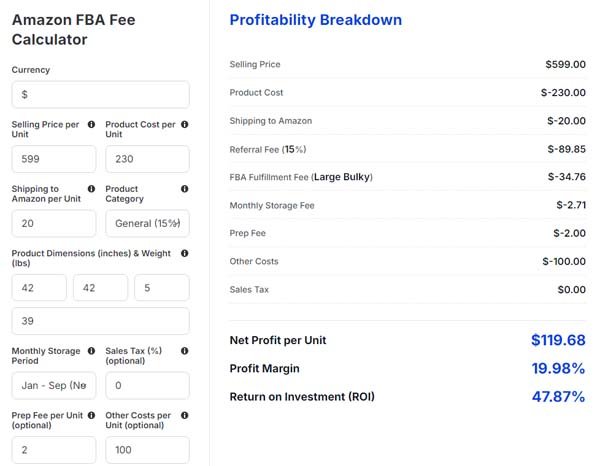
Besides hidden FAB storage, local logistics, prep fees, and Amazon commissions (usually 15% of the total sale), retail customers return items frequently, sellers always add an extra 5-10% "safety margin" to the price to cover those losses. You aren't paying for a better LED; you are paying for Prime Shipping and the ability to return a light because you "didn't like the color."
Specialized Brand Websites (Direct-to-Consumer Brands)
- Who it is for: Growers who want a "curated" experience and are willing to pay a premium for a specific brand's reputation and community.
- The Reality: Most of these brands are marketing experts, not manufacturers. They provide great customer support and slick manuals, but you are often paying double the factory cost to fund their Instagram ads and brand storytelling.
Brands on Shopify spend a fortune on Google Ads and Influencer marketing. On average, it can cost a brand $50–$100 in advertising just to get one person to buy a light. That cost is passed directly to you.
B2B Sourcing Platforms (Alibaba.com)
- Who it is for: Serious growers, facility owners, and smart buyers who want factory-direct pricing and technical depth.
- The Reality: This is where the supply chain begins. It is the most cost-effective way to buy. By cutting out the Amazon middlemen and the Shopify brand owners, you can often get the same high-end components (Sosen/MeanWell drivers, Samsung/Osram chips) for less than half the retail price.
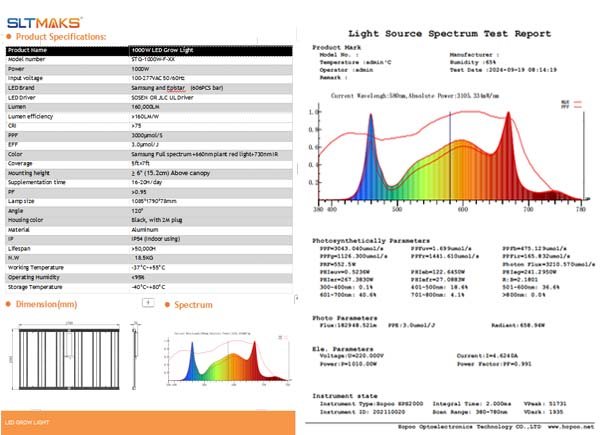
This is where the price meets the raw manufacturing cost. B2B platforms are designed for professionals. Even if you buy just one "sample" unit, you are getting the wholesalerate. Factories like ours prioritize turnover and long-term partnerships over high individual markups. On Alibaba, you are often talking to the sales engineer or the factory owner. There is no 15% platform commission, no expensive social media ad campaign, and no "luxury brand" markup. In a B2B environment, we don't use fancy adjectives. We show you the LED chip brand (Samsung/Osram), the driver efficiency, and the certified PPE/PPFD test reports. You pay for the components, not the box.
The hardware hasn't changed. Only the marketing layer has.
As a factory owner with 16+ years of history, I see the cycle every day:
A brand owner orders 500 units from our production line. We provide the ETL/DLC certifications, the professional testing, and the 5-year warranty. The brand owner then puts their logo on the box and lists it for $699 on their site. Meanwhile, on our B2B page, that exact same light is available for $230.
The Pros and Cons of Each Shopping Path
Still unsure? Let's look at the trade-offs. It’s not just about price; it’s about what you value most.
Buying from Amazon/Retailers:
- Pros: You get it tomorrow; you can return it easily if you change your mind.
- Cons: You pay double for the same performance. You rarely get the real data report.
Buying Directly from Factories (Alibaba/B2B):
- Pros: Best price-to-performance ratio. Direct technical support. Access to the latest manufacturing tech.
- Cons: Shipping takes longer (usually 7-20 days). You need to do a bit more homework to verify the seller.
Risk Control: How to Source Safely on B2B Platforms
Buying direct from the factory offers the best value, but it requires a bit more "due diligence" than clicking a button on Amazon. Here is the professional checklist to ensure you get high-end hardware every time on Alibaba.com.
Look for the "Verified" Status
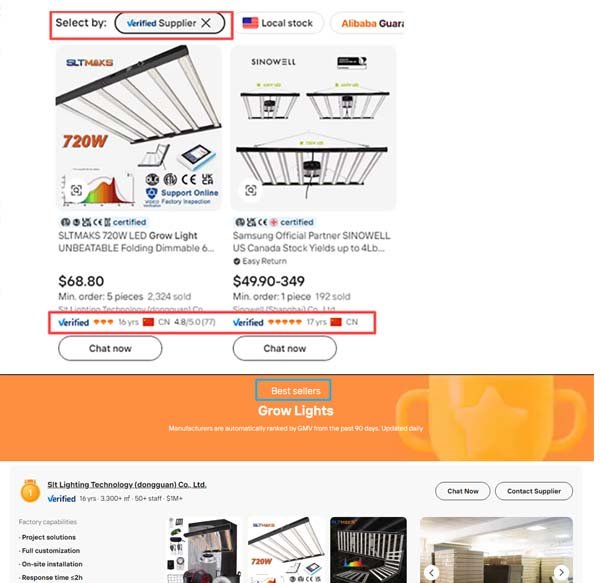
On platforms like Alibaba, prioritize Verified Suppliers. This means a third-party inspection company (like Intertek or SGS) has physically visited the factory, checked their production lines, and confirmed their legal status.
- Pro Tip: Look for a factory with at least 5–10 years of history. A company that has survived for over a decade (like ours, with 16+ years) isn't going to disappear overnight.
Use Alibaba Rankings to Spot the "True Leaders"
Alibaba provides several data-driven rankings. Learning how to read them can help you distinguish between a massive, high-conversion factory and a company that is just good at getting attention but poor at delivering value.
- Best Seller: Manufacturers are automatically ranked by GMV from the past 90 days. Updated daily.
This list shows companies with the highest sales volume. If a company is at the top, it means large-scale buyers and professional facilities trust their quality enough to place big orders.
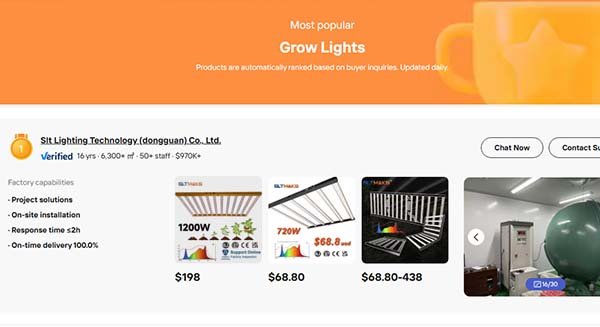
- Most Popular: Products are automatically ranked based on buyer inquiries. Updated daily.
This shows who is getting the most clicks and questions. However, here is the "Factory Owner's Secret": If a company is #1 in "Most Popular" but ranks lower in "Best Seller," it’s a red flag. It means they are great at marketing, but their product or price fails to convince professionals to actually buy.
The "Double Leader" Rule: Look for companies that appear at the top of multiple lists. A factory that is consistently in the top of both Best Seller and Most Popular categories is a healthy, active, and high-performance entity that you can trust.
Demand Real Technical Documentation
A retail site uses flashy photos; a professional factory uses data. Before you buy, ask the seller for:
- PPFD Maps: To see the actual light intensity at different heights.
- Spectrum Test Reports (Integrating Sphere): To confirm the exact wavelengths (Red, Blue, UV, IR).
- Certifications: Ensure they have ETL, DLC, or UKCA markings that match the product. You can verify these certificates on the official databases.
Use Trade Assurance
You can use Alibaba Trade Assurance. This service acts as an escrow, protecting your money until you confirm that the goods have been shipped and meet the quality standards agreed upon in the contract.
You Can Ask for A Customization
If you need a specific spectrum (like more 660nm or added UV), a factory can do it for you. A retail store only sells what is on the shelf.
SLTMAKS | SLT Lighting is exactly that kind of partner you can trust. As a Verified, Best Seller on Alibaba, and a professional factory with over 16 years of industry experience, we don’t just sell lights
Conclusion - Making the Smart Choice
The secret to buying energy-efficient grow lights is realizing that price does not always equal quality.
- If you value speed and simplicity, and don't mind paying a 100% markup, Amazon is your tool.
- If you want professional-grade hardware, the ability to customize your spectrum, and the satisfaction of keeping your budget for actual growth instead of marketing ads, buying direct from the factory is the only way to go.
At SLTMAKS, we’ve spent 16 years perfecting this balance - providing the high-end specs that the big brands use, aiming to help growers buying quality grow lights at affordable price.
FAQ
Q1: If I buy from a factory on Alibaba, will the plug work in my country?
A: Absolutely. Professional factories like SLTMAKS produce lights for a global market. When you order, simply specify your region (US, UK, EU, AU), and the light will be fitted with the correct NEMA or regional plug and the appropriate voltage driver (usually 100V–277V).
Q2: What happens if a light breaks? How does factory warranty work compared to Amazon?
A: On Amazon, you often just return the whole unit for a refund. With a factory like SLTMAKS, we offer a professional 5-year warranty. Because we are the manufacturer, we don't just "refund" - we provide technical support and replacement parts (like drivers or LED boards) immediately. This is much more sustainable for long-term facility owners.
Q3: Is the shipping cost from China too expensive for a single light?
A: While individual shipping is higher than local retail, the total cost (Price + Shipping) is still usually lower than buying the same spec light on Amazon. For orders of 50+ lights, the "per unit" shipping cost drops significantly, making the factory-direct route even more profitable.
Q4: Do I have to pay import duties/taxes when buying from the factory?
A: It depends on your country's regulations. However, many professional suppliers offer DDP (Delivered Duty Paid) shipping terms, where the factory handles all customs and taxes. This makes the experience just as simple as buying from a local website. We can do DDP terms.