
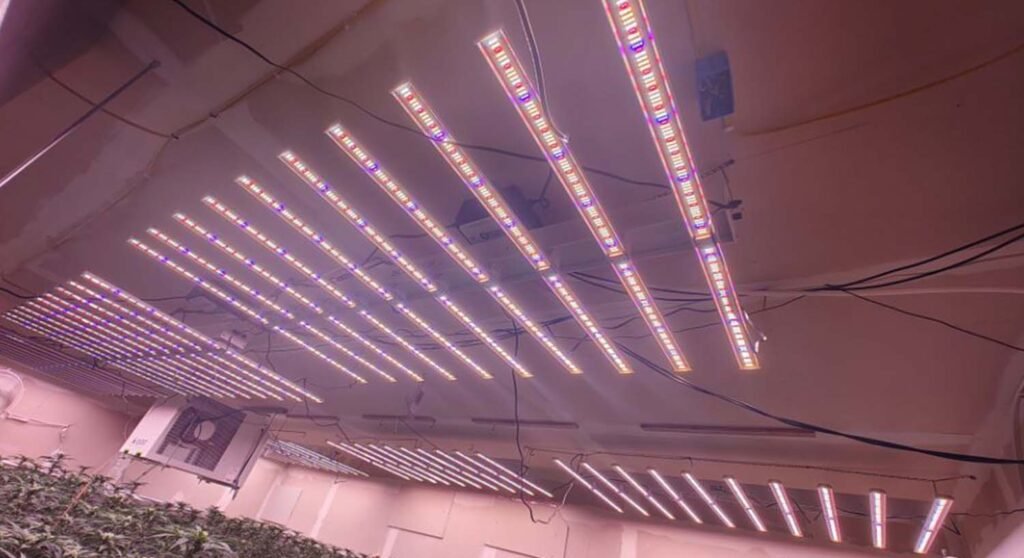
If you are new to indoor gardening, you’ve likely seen two terms pop up everywhere: LED Grow Lights and Full Spectrum Grow Lights.
Most beginners ask: "Which one should I buy?" or "Is Full Spectrum better than LED?"
Before you spend a single dollar, let’s clear up the "industry secret" that many marketing brochures won't tell you: Full Spectrum is not a replacement for LED. In fact, they are two different ways of describing the same technology.
The Common Misconception: LED Grow Lights and Full Spectrum Grow Lights.
To understand this clearly, think of it this way:
LED is the palette, and Full Spectrum is the specific color combination mixed from that palette to mimic natural sunlight.
Just as an artist uses a palette to create a masterpiece, lighting manufacturers use LED technology to create a "Full Spectrum" light. You aren't choosing between a palette and a painting; you are choosing the right technology (LED) to deliver the perfect light recipe (Full Spectrum).
Does Grow Lights Really Help Plants Grow?
The short answer is: Absolutely.
Plants are not "picky" about where their light comes from, but they are very specific about the type of light they receive. In nature, plants use the sun’s energy for photosynthesis. In an indoor environment, grow lights act as a sun substitute.
By delivering specific particles of light (photons) directly to the leaves, high-quality grow lights can:
- Trigger Photosynthesis: Provide the energy needed for the plant to create food.
- Extend Growing Seasons: Allow you to grow fresh greens or flowers in the dead of winter.
- Control Growth Cycles: Mimic long summer days or short autumn days to tell the plant when to grow leaves and when to produce fruit.
As long as the light provides the correct intensity and the right colors, your plants will thrive just as well - and often better - than they do outdoors.
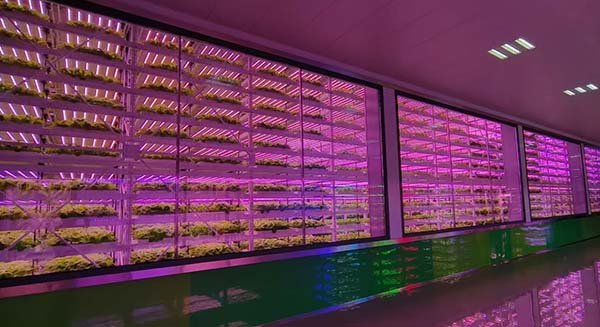
Full Spectrum vs. LED: Breaking Down the Concepts
To choose the right light, we need to separate the technology from the output.
What is an LED Grow Light?
LED stands for Light Emitting Diode. It is the hardware technology. LEDs have revolutionized indoor farming because they are incredibly energy-efficient, produce very little heat, and - most importantly - their light output is highly customizable.
What is a Full Spectrum Grow Light?
Full Spectrum is a marketing and technical term for the light's "recipe." It means the light output covers a broad range of wavelengths, from ultraviolet (UV) to infrared (IR), much like the natural sun.
In the early days, most LED grow lights were "Blurple" (a mix of only Red and Blue LEDs). Today, when we say "Full Spectrum LED," we are referring to modern LEDs that use a blend of white, red, blue, and sometimes specialized diodes to create a balanced, sun-like glow that supports a plant from seed to harvest.
How Light Colors Affect Growth?
What Do Grow Light Colors Mean?
Plants don't "see" light the way humans do. While we see brightness, plants see energy in specific wavelengths. Each color tells the plant to do something different.
- Blue Light (400-500nm): The "Body Builder": Blue light is essential for the vegetative stage. It helps plants develop strong, thick leaves and sturdy stems. Most importantly, it prevents "stretching" (leggy growth), keeping your plants compact and healthy.
- Red Light (600-700nm): The "Energy Booster": Red light is the primary engine for photosynthesis and is crucial for the flowering and fruiting stages. It signals the plant that it’s time to reproduce, leading to larger blooms and higher yields.
- Green & Yellow Light: The "Deep Penetrator": While often overlooked, green light penetrates the thick upper canopy better than red or blue, reaching the lower leaves that would otherwise be in the dark.
- UV Light (Ultraviolet, 300-400nm): The "Immunity & Potency Booster": In nature, plants produce natural "sunscreen" (resins, flavonoids, and antioxidants) to protect themselves from UV rays. By adding a small amount of UV to your grow light, you "stress" the plant in a good way. This results in stronger aromas, more vivid leaf colors, and higher levels of medicinal compounds or vitamins.
- IR Light (Infrared/Far-Red, 700-800nm): The "Speed & Harvest Trigger": IR light mimics the low-angle sun of sunset. It can trigger the "Shade Avoidance Response," telling the plant there is a neighbor blocking its light, which encourages leaves to expand and the plant to flower faster. When combined with Red light (660nm), it creates the Emerson Effect, significantly increasing the overall rate of photosynthesis.
💡 Pro Tip from the Factory:
Be careful! While UV and IR are powerful, acting like the "specialists" that fine-tune the plant's quality and timing., they should only make up a small percentage of your total light output. Too much UV can damage plant tissue, and too much IR can cause plants to become too tall and spindly. Balance is the key to professional spectral engineering.
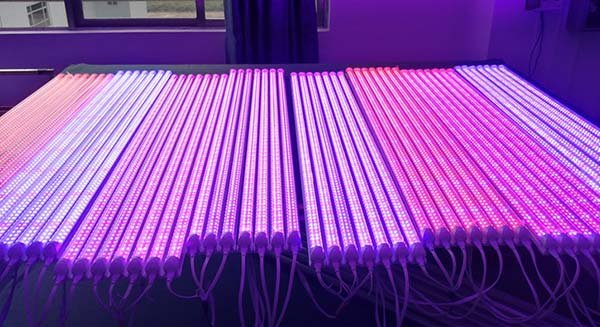
How to Choose the Right Light for Your Plants?
Different plants have different "appetites" for light. Choosing the right spectrum is like preparing a customized meal for each species.
Leafy Greens & Herbs (Lettuce, Kale, Mint, Basil)
- Goal: Fast growth, tender leaves, and no bolting.
- Spectrum Choice: High Blue and Cool White content. Blue light keeps these plants compact and prevents them from growing too tall and thin, which can make them bitter.
Fruiting Plants (Strawberries, Tomatoes, Peppers)
- Goal: Strong root systems first, followed by heavy flowering and sweet fruit.
- Spectrum Choice: A Full Spectrum heavily supplemented with Red (660nm). Red light is the "fuel" for sugar production and fruit development. For strawberries, a touch of Far-Red (IR) can even improve the fruit's size and aroma.
Specialty Crops (Cannabis)
- Goal: Maximum resin production, dense buds, and high potency.
- Spectrum Choice: A complex Full Spectrum including UV and IR. UV light triggers the plant to produce more resin (trichomes) as a defense mechanism, while IR helps in the transition to the flowering stage and increases bud density.
💡 Pro Tip: Look at the PPFD, Not Just the Color
While color is important, intensity is the other half of the puzzle. Even the perfect spectrum won't help if the light is too dim. Always check the PPFD (Photosynthetic Photon Flux Density) to ensure your plants are getting enough "light food" at the right distance.
The Pros and Cons of Using Grow Lights
Before you invest, it is important to have a realistic expectation. Grow lights are powerful tools, but they come with their own set of responsibilities.
The Pros:
- Year-Round Growing: You are no longer dependent on the weather. You can grow summer tomatoes in the winter or start your spring seedlings while there is still snow outside.
- Complete Control: You decide how many hours of "sunlight" your plants get. You can speed up growth or trigger flowering at will by adjusting the light timer and spectrum.
- Space Optimization: With grow lights, you can grow plants in basements, closets, or even stacked in vertical shelves, maximizing your living space.
- Enhanced Quality: Modern LED spectrums (especially those with UV/IR) can often produce plants with higher nutrient levels and stronger aromas than those grown in unpredictable outdoor light.
The Cons:
- Initial Cost: High-quality LED grow lights - the ones with true full spectrum and professional build quality - can be a significant upfront investment compared to cheap shop lights.
- Electricity Consumption: While LEDs are efficient, running them for 12–18 hours a day will increase your monthly power bill. It's a long-term operational cost to consider.
- Heat Management: Even though LEDs run much cooler than old HID bulbs, they still generate heat. In a small grow tent, this can raise the temperature, requiring fans or ventilation to protect your plants.
Summary: Making the Right Investment
As we’ve explored, LED is the powerful engine that makes indoor farming possible, while Full Spectrum is the balanced recipe that makes plants thrive. Whether you are growing crunchy kale or high-potency cannabis, success lies in the balance of red, blue, UV, and IR.
LED is the Tech, Full Spectrum is the Goal: Don't choose between them. Look for an LED fixture that provides a "Full Spectrum" to ensure your plants get sun-like nutrition.
Wavelengths Matter: Use more Blue for leafy greens and more Red/IR for flowers and fruits. Don't forget UV for quality and aroma.
Be Truthful with Data: Avoid lights that make "miracle" claims without providing an Spectrum map or PPFD data. Professional results come from professional measurements.
FAQ
Q1: Are grow light bulbs different from regular light bulbs?
- A: Yes, fundamentally. Regular bulbs are designed for human eyes, focusing on Lumens (brightness). Grow lights are designed for plants, focusing on PPFD (Photosynthetic Photon Flux Density). A regular bulb lacks the specific red and blue peaks needed to keep a plant healthy long-term.
Q2: Are grow lights safe for humans?
- A: Generally, yes. They do not emit harmful ionized radiation (like X-rays). However, because they are high-intensity light sources, you should treat them with the same respect you give the sun.
Q3: Can grow lights cause cancer?
- A: There is no evidence that standard LED grow lights cause cancer. They use non-ionizing radiation. While some professional lights contain UV-A/B, the levels are typically much lower than standing outside in the summer sun. Just avoid long-term direct skin exposure at very close range.
Q4: Can grow lights hurt your eyes?
- A: Yes, if used incorrectly. The high intensity and specific "Blue Light" can cause eye strain or retinal fatigue if you stare directly at the diodes. We always recommend wearing professional grow light glasses (especially for Blurple or high-intensity COB lights) and never looking directly into the light source.
Q5: How many hours per day should you use a grow light?
- A: It depends on the growth stage, but most plants need between 12 to 18 hours of light per day. Seedlings and leafy greens (like lettuce) usually thrive on 14-16 hours. Flowering plants may need a shift in timing - for example, 18 hours during the "veg" stage and exactly 12 hours of darkness to trigger blooming. Remember, plants need a "rest" period too, so never leave the lights on for 24 hours straight!
Q6: Do grow lights run up your electric bill?
- A: While any electrical appliance adds to your bill, LED grow lights are incredibly efficient compared to older HPS or HID plant light systems. For example, a high-efficiency 100W LED used for 16 hours a day might only cost you a few dollars a month (depending on your local rates). To keep costs low, look for lights with high PPE (Photosynthetic Photon Efficacy) ratings, which means they turn more electricity into light and less into wasted heat.