
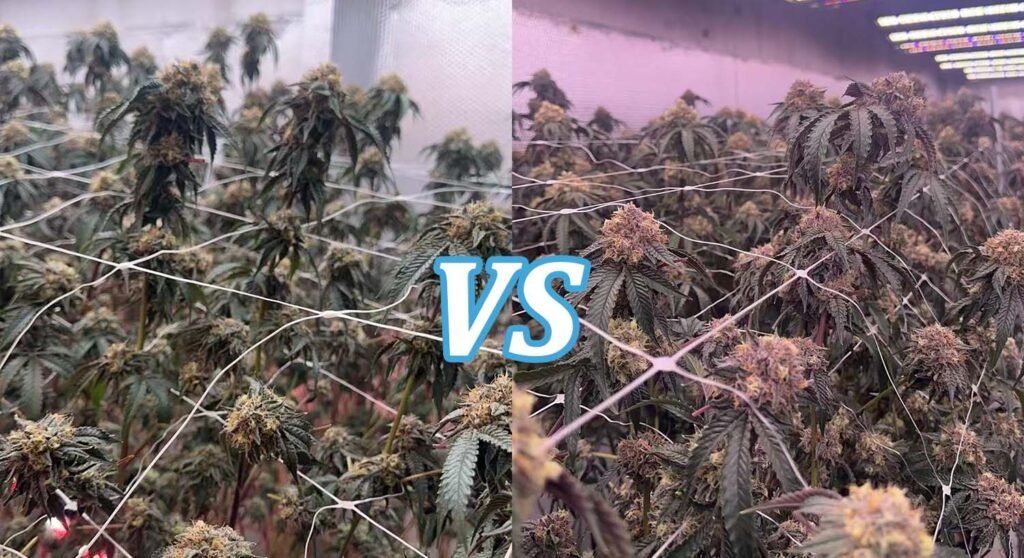
In the current 2026 cannabis market, the difference between a "surviving" facility and a "thriving" one often comes down to a single metric that most growers overlook: Edge-to-Center Uniformity. Many growers pride themselves on hitting 1,800 μmol/㎡/s at the center of their 4x4 footprint. However, if that intensity drops to 100 μmol/㎡/s at the corners, you aren't growing a consistent crop. You are growing "Top-shelf" in the center and "Mids/Larf" at the edges.
The Hidden Cost of Inconsistency:
In our recent follow-ups with 1300W LED clients across North America, we found our lights are better than most other brands, and there is a recurring pattern: Facilities with poor light distribution were losing up to 22% of their potential revenue per cycle.
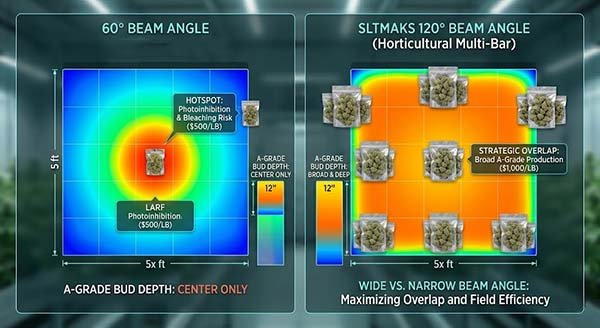
- The Price Gap: In 2026, "A-Grade" firm, trichome-heavy flower commands $1,000/lb, while loose, light-starved "edge buds" struggle to clear $500/lb.
- The Lab Test Trap: Inconsistent light leads to inconsistent THC percentages. A single batch with fluctuating potency can ruin your brand's reputation with high-end wholesalers who demand stability.
Our SLTMAKS series grow lights aren't just about raw power; they are about Redistributing the Energy to ensure every square inch of your canopy is a profit center.
Decoding the PPFD Map - Physics, Beam Angles, and the "Overlap" Secret
When a manufacturer shows you a PPFD map, they are showing you a snapshot of a single light in a vacuum. But in a commercial facility, lights don't work alone.
The 120° vs. 60° Debate: Why Wide is King
Some Leds manufacturers uses 60° or 90° secondary lenses to "push" light down. While this creates a massive center PPFD number, it’s a trap for commercial growers.
- The 60° Laser Effect: Concentrates energy in the middle, leading to light stress/bleaching, while leaving the edges in deep shadow.
- The SLTMAKS 120° Advantage: By using a natural 120° beam angle, our grow light fixtures allow light to spread horizontally. This isn't a "weakness" at the edges; it’s a Strategic Overlap.
The Secret of "Cross-Lighting" (Overlap)
In a professional 1000W or 1300W setup, the light hitting the edge of A plant isn't just coming from the light directly above it - it's receiving "supplemental" photons from the neighboring light bars.
- Multi-Bar Engineering: Because the SLTMAKS 1300W grow light features 10 to 12 light bars, the light source is distributed across a larger physical area.
- Uniformity through Geometry: This geometry ensures that the "valleys" in one light's footprint are filled by the "peaks" of the next, creating a sea of consistent photons.
- Advanced Engineering: Driving the Diodes for Longevity: It’s not just about the angle; it’s about Thermal Management per Diode. By spreading 1300W across thousands of chips, each diode runs cooler and more efficiently than a concentrated less LEDs light board. SLTMAKS Basic 1300W grow light model is with 10 bars and 5400pcs leds in total.
The Height Equation — Why Your 1300W Hanging Strategy is Stealing Your Terpenes
During our 2026 client follow-ups, we discovered a shocking trend: Nearly 15% of growers were underperforming simply because of incorrect fixture height.
With high-power units like the SLTMAKS 1000W and 1300W, "guessing" the height isn't just a technical oversight—it’s a massive profit leak. Finding the best hanging height for 1000W LED systems is about balancing the Inverse Square Law with the plant's biological ceiling.
The "Too High" Trap: Wasting Photons on Walls
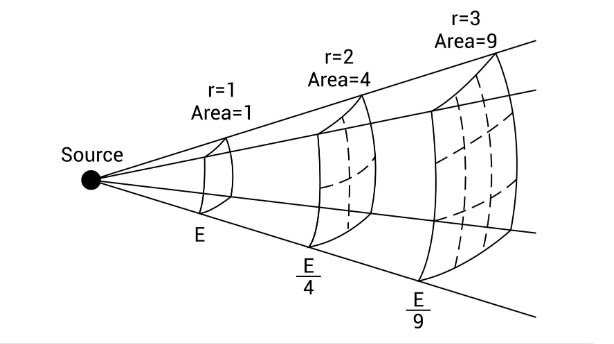
Many growers hang their lights at 36" or higher, fearing light burn. However, due to the Inverse Square Law, the light intensity drops exponentially with distance.
- The Waste: At 36", a significant portion of your 1300W output spread before reaching the plant. Unless you have perfect 100% reflective surfaces (which don't exist), you are paying for electricity to light up your room, not your flower.
The "Too Low" Trap: Photoinhibition and Heat Stress
On the other end, hanging a 1300W monster at 6" above the canopy causes Photoinhibition. The plant's biological machinery shuts down because it cannot process the overwhelming photon flux.
- Terpene Volatilization: Even with a cool-running LED, the radiant heat at extreme proximity can bake off the delicate terpenes, leaving you with high THC but zero "bag appeal" or aroma.
- The Inverse Square Law: Reducing the distance from 24" to 12" doesn't just double the light—it quadruples it.
The SLTMAKS 2026 Optimized Height Chart (Commercial Standards)
To help our partners stay in the "Profit Zone," we’ve calibrated the best hanging height for 1000W LED and 1300W fixtures based on real-world commercial results:
| Grow Phase | 1000W Distance | 1300W Distance |
| Vegetative | 24" - 30" | 30" - 36" |
| Early Flower | 18" - 24" | 24" - 30" |
| Late Flower | 12" - 18" | 16" - 24" |
For the SLTMAKS 1300W, we recommend staying at 18" during the peak of flowering. This height allows our 120° beam angle to fully overlap with neighboring lights, filling the "edge gaps" we discussed earlier while maintaining massive penetration to the lower nodes.
The Commercial Efficiency Shortcut — Dimming vs. Height Adjustment
Pro Tip for Large-Scale Facilities: Work Smarter, Not Harder
In a commercial facility with hundreds of lights, manually adjusting the LED distance from canopy for every fixture is a labor-intensive nightmare. At SLTMAKS, we’ve engineered a more efficient solution for the modern Master Grower.
- The Controller Advantage: Instead of physically moving your 1300W lights, you can achieve the same PPFD intensity variations through our integrated 0-10V dimming controllers.
- One-Touch Scalability: A single SLTMAKS controller can synchronize up to 200 fixtures simultaneously. By keeping the lights at a fixed, safe height and simply adjusting the light intensity percentage, you save hundreds of man-hours per cycle.
- Precision Control: This allows you to simulate the "Sun's Path" or gradually increase intensity as plants move into peak bloom, all from a central interface.
Beyond the Multi-Bar Silhouette — Engineering for ROI and Industrial Scale
In 2026, the "Multi-Bar" design has become the industry standard. However, for a commercial facility, the silhouette is only 10% of the story. At SLTMAKS, we don't just build lights; we engineer Industrial Tools where every millimeter of the structure and every component in the circuit is optimized for total cost of ownership.
Oversized Engineering: Covering More with Less
While many manufacturers shrink their bar dimensions to save on shipping, SLTMAKS utilizes an Oversized Structural Design.
- The Scale Advantage: Our 1300W fixtures feature a larger physical footprint. This allows for a wider, more natural light distribution that covers a standard 4×6ft, max 6×8ft area with superior uniformity.
- Labor & Infrastructure Savings: Because our single unit covers more effectively, a large-scale facility can achieve its target space and PPFD with fewer total fixtures. This means fewer power drops, less racking weight, and significantly lower installation and maintenance costs.
The Premium Configuration: Samsung Diodes & SOSEN Power
Reliability in a high-stakes grow environment starts with the bill of materials. We don't compromise on the "Heart and Soul" of the fixture.
- The Soul (Diodes): We exclusively use Samsung high-efficiency diodes. Beyond raw brightness, these chips offer superior thermal stability, preventing the spectral drift that can ruin crop consistency over time.
- The Heart (Driver): Every SLTMAKS 1000W and 1300W is powered by SOSEN (Publicly Listed) industrial drivers. As a global leader in LED power supply, SOSEN ensures our fixtures handle voltage fluctuations without flickering, ensuring a 5-year stable operation in even the harshest facility environments.
Thermal Integrity: Passive Cooling for Terpene Protection
- Our structural heat sinks are designed for maximum passive airflow. This keeps the LED distance from canopy safe from radiant heat spikes. By running cooler than generic multi-bar lights, we protect the volatile aromatic compounds (terpenes) that define "Top-Shelf" quality in the 2026 wholesale market.
Conclusion: Investing in a Production Tool, Not Just a Light
For the commercial grower in 2026, the goal is Predictability. With SLTMAKS, you get a system designed for large-scale efficiency, world-class components, and the peace of mind that your facility will perform at peak levels for years to come.
FAQ
Q1: Why choose Samsung Diodes and SOSEN Drivers over generic brands?
- A: Reliability is ROI. Samsung diodes offer higher efficacy (μm/J) and slower lumen depreciation. SOSEN drivers (Publicly Listed) are industrial-grade, designed to handle the voltage fluctuations common in large-scale grows, ensuring your 5-year warranty is backed by actual hardware longevity.
Q2: How do I handle the extra heat from a 1300W fixture in a sealed room?
- A: Usually air conditioner is used in commercial indoor growing, and it could cover it. While SLTMAKS uses passive cooling, 1300W of energy still converts to BTUs. We recommend an HVAC capacity of approximately 3,500 - 4,000 BTU per 1000W-1300W fixture. Using our controllers to "Sunrise/Sunset" dimming can also prevent sudden heat spikes.
Q3: Can the 1300W model run on 480V?
- A: Yes, it can run on 480V. All SLTMAKS grow lights of standard version is AC100-277V. Our premium version can work on 347V - 480V circuits. This reduces amperage draw per fixture, allowing you to chain more lights on a single breaker and reducing the cost of heavy-gauge copper wiring.
Q4: Can I use the 1300W for CO2-enriched environments specifically?
- A: Absolutely. To fully utilize the 1,800 μmol from the 1300W beast, you should maintain CO2 levels between 1,200 - 1,500 ppm. Without CO2, the plant cannot process that much light, leading to saturation.
Q5: Can I integrate SLTMAKS lights with my existing environment controller?
- A: Our lights work for RJ12 ports. They are compatible with most major commercial controllers, allowing for seamless integration into your facility's automation. If you not sure, contact us to check it directly.
References
- Inverse Square Law (Photometry). The foundational physics governing how LED distance from canopy affects PPFD intensity.
- DLC (DesignLights Consortium) V4.0 Horticultural Specifications | DLC V4.0 The industry standard for efficacy (μmol/J) and long-term photon flux maintenance for LED fixtures.
- Samsung Horticulture LED Technology
- SOSEN LED Driver for Horticulture Lighting
- ASABE: 2025 Agricultural Equipment Technology Conference