
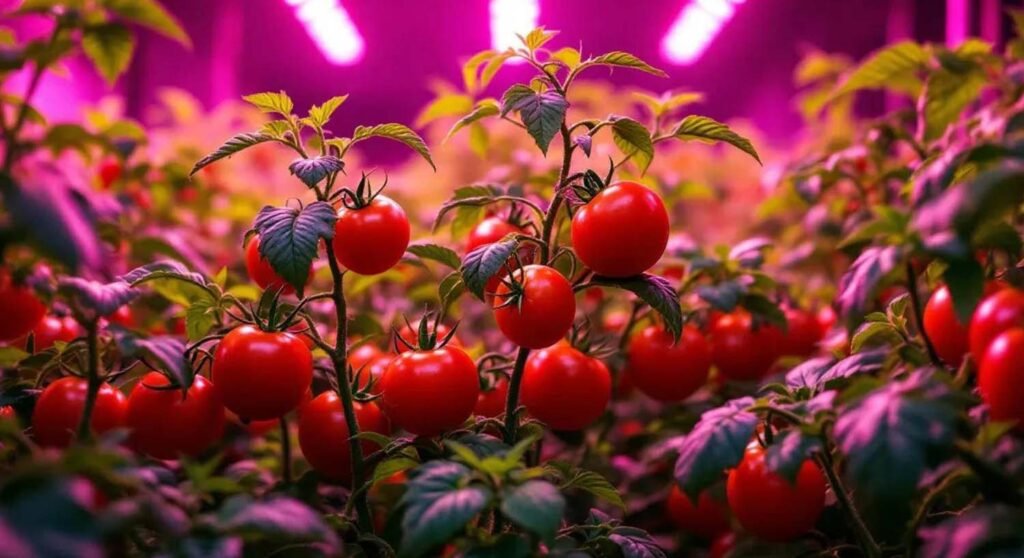
In large-scale commercial horticulture, tomatoes are classified as "high-light intensity" crops. Unlike leafy greens or ornamental plants, the tomato's physiological structure is designed to process massive amounts of photons to fuel the transition from vegetative growth to heavy fruit loading. For a professional facility, selecting the "best" grow light is a calculation of Photogrammetric Efficiency - how effectively a fixture converts electrical energy into harvestable biomass. So what kinds of led grow light is the best grow light for tomatoes?
The Bio-Energetic Demands of Commercial Tomato Cultivation
The Crucial Role of PPFD and DLI in Yield Forecasting
For a commercial tomato facility, the two most critical metrics are PPFD (Photosynthetic Photon Flux Density) and DLI (Daily Light Integral). These are the "currency" of your greenhouse.
- PPFD Thresholds: To maintain professional-grade production, tomatoes require a minimum PPFD of 400-600 µmol/m²/s during the early stages, escalating to 800-1200+ µmol/m²/s during peak fruiting. Anything less in a windowless or light-deprived environment results in "leggy" plants with weak vascular systems, incapable of supporting heavy trusses.
- The DLI Target: Commercial tomatoes demand a DLI of 25-35 mol/m²/d for optimal yield. In many regions, natural sunlight alone cannot hit these targets consistently throughout the year. High-output LED systems serve as the "bridge" to maintain this target 365 days a year, ensuring that your harvest schedule remains unaffected by seasonal light decay.
Canopy Penetration: The Vertical Challenge
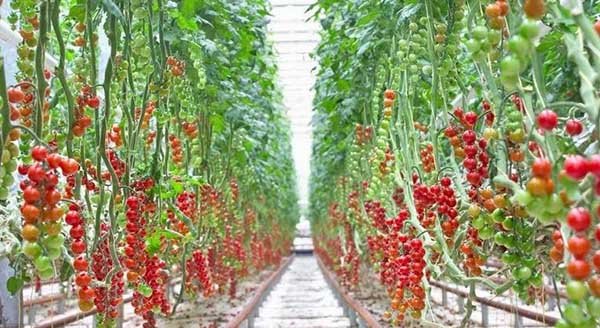
One of the primary differences in commercial tomato lighting compared to other crops is the canopy depth. A mature tomato vine can reach heights of several meters in a V-system or high-wire facility.
- The Limitation of Top Lighting: Traditional Top Lighting often provides excess energy to the top leaves while leaving the middle and lower fruit clusters in the "shadow zone." This light starvation in the lower canopy leads to uneven ripening and smaller fruit size at the bottom of the vine.
- The Engineering Solution: You can choose a system that balances high-intensity Top Lighting with Inter-lighting. By placing targeted LED bars within the canopy itself, you deliver photons directly to the fruit-bearing zones. This dual-source approach ensures that the "factory" (the top leaves) and the "product" (the fruit) both receive optimal energy, maximizing the overall energy use efficiency of the facility.
Best Grow Light for Tomatoes: Spectral Control - Architecting Plant Morphology and Fruit Quality
In a commercial tomato environment, the spectrum is more than a source of energy; it is a growth regulator. By manipulating specific wavebands, a grower can control the physical structure of the vine and the biochemical accumulation within the fruit. This eliminates the "randomness" of natural light and replaces it with industrial precision.
Managing the "Inter-nodal Length": The Power of Blue (450nm)
One of the most significant challenges in indoor tomato cultivation is stretching or "etiolation." If the internodal length (the distance between leaves) is too long, the plant becomes structurally weak and inefficient in space utilization.
- The Compact Architecture: High-energy Blue photons (450nm) act as a natural brake on stem elongation. By ensuring a sufficient blue ratio in the spectrum, especially during the early vegetative and flowering stages, you can choose to create a compact, robust plant architecture.
- Commercial Benefit: A compact plant can allocate more energy toward fruit production rather than structural stretching. This also facilitates easier management in high-wire systems and improves airflow throughout the canopy, reducing the risk of fungal pathogens in high-density facilities.
Optimizing Fruit Fill and Ripening: The Red to Far-Red Dynamics
While blue light builds the "frame," Red light (660nm) and Far-Red (730nm) drive the "output."
- The 660nm Engine: Deep Red light is the most efficient wavelength for driving photosynthesis. In tomatoes, a spectrum heavy in 660nm directly correlates with fruit weight and the rate of fruit set. It provides the high-octane fuel required for the heavy metabolic demand of developing large trusses.
- The Far-Red (730nm) Advantage: In modern commercial recipes, Far-Red is no longer considered "waste" light. You can choose to include 730nm to trigger the emerson effect, which boosts the overall photosynthetic rate when combined with shorter red wavelengths. More importantly, Far-Red can influence "distal sink strength" - effectively pulling more carbohydrates into the fruit, leading to a faster ripening cycle and increased Brix (sugar) levels.
Flavor Engineering and Secondary Metabolites
For premium tomato markets, yield is only half of the equation; flavor is the differentiator.
- UV and Full-Spectrum Influence: The complex taste of a tomato - the balance of acids and sugars - is influenced by secondary metabolites like lycopene and various volatile compounds. A broad, full-spectrum LED solution that mimics the sun’s depth (including trace UV-A) stimulates the plant's stress-response mechanisms in a controlled way.
- The Outcome: This results in a fruit that doesn't just look "commercial and technologucal" but tastes "vine-ripened." For the commercial grower, this translates to a higher price per kilogram and stronger brand loyalty from retailers and consumers.
Best Grow Light for Tomatoes: Environmental Synergy and Operational Efficiency
In a commercial-scale tomato facility, the lighting system does not operate in isolation. It is a critical component of the total controlled environment. The goal is to achieve biological optimization without placing undue stress on the greenhouse’s climate control systems.
Thermal Engineering: Protecting the Pollination Cycle
Tomatoes are highly sensitive to ambient temperature, particularly during the flowering and fruit-set stages. Excessive radiant heat can cause pollen sterility, leading to "blossom drop."
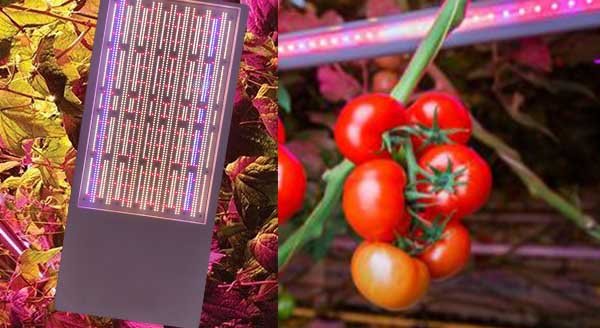
- Passive Cooling Logic: High-efficiency LED systems focus on converting electrical energy into PAR (Photosynthetically Active Radiation) rather than heat. By utilizing advanced thermal management, you can choose a solution that maintains a stable canopy temperature.
- Climate Consistency: Unlike traditional high-pressure sodium (HPS) lamps that create hot spots and drive up cooling costs, professional-grade LEDs allow the greenhouse HVAC system to operate more predictably. This thermal stability ensures that the humidity and temperature remain in the "sweet spot" for bumblebee pollination and metabolic activity.
Strategic Durability in High-Humidity Facilities
A precision tomato greenhouse is a demanding environment, often involving high humidity, CO2 enrichment, and regular fertigation misting.
- Ingress Protection (IP) Standards: For long-term reliability, fixtures must withstand persistent exposure to moisture and potential chemical residues. Choosing a system with an IP65 or higher rating is a strategic decision that protects the facility's capital expenditure from premature electronic failure.
- Operational Longevity: In a systematic growing operation, downtime is lost revenue. Robust engineering ensures that the light output remains consistent over tens of thousands of hours, providing the stable "photon heartbeat" that a commercial crop requires to finish strong.
Best Grow Light for Tomatoes: Lifecycle Management - From Robust Seedlings to Deep Canopy Harvest
In a commercial-scale tomato operation, the lighting requirements shift as the plant matures. A truly systematic approach treats each stage of growth - from the initial flask or seed to the final harvest - as a distinct operational phase with unique photon requirements.
The Propagation Phase: Engineering a "Legacy of Strength"
The success of a tomato crop is often decided in the first 21 to 30 days. In a professional nursery, the goal is to produce a seedling with a thick stem, dark green leaves, and an expansive root system.
- Blue-Rich Initiation: During propagation, you can choose a spectrum with an increased Blue (450nm) ratio. This high-energy light prevents "stretch" and ensures the plant remains compact. A shorter, sturdier seedling is significantly easier to transplant mechanically and is less prone to damage during handling.
- The Foundation for Yield: A robust start ensures that the first flower truss develops early and close to the base, which is essential for maximizing the total vertical output of the facility.
Mature Production: Mastering Deep Light Penetration
As tomato vines reach their full height in a high-wire system, the upper leaves (the "canopy") become so dense that they create a biological barrier, reflecting or absorbing up to 90% of the top-down light.
- Solving the "Shadow Zone": In professional-grade facilities, relying solely on overhead lighting leads to a "diminishing return" at the bottom of the vine. This results in smaller fruit and delayed ripening on the lower trusses.
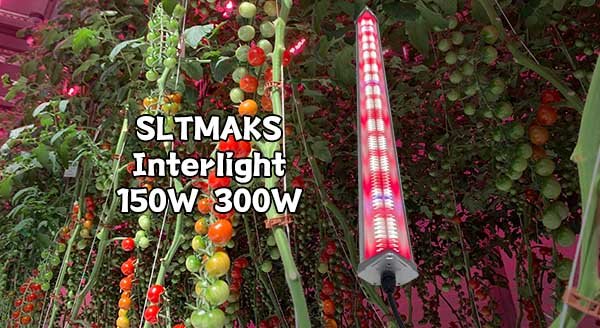
- Inter-lighting Strategy: You can choose to implement Inter-lighting modules. By placing linear LED bars within the leaf canopy, photons are delivered directly to the middle and lower fruit clusters. Data from precision facilities shows that adding inter-lighting can increase total yield by up to 15-20% by ensuring that every fruit cluster—not just the top ones—has the energy needed for full development.
Predictive Harvest Cycles
Technological lighting allows a grower to become a "time manager." By maintaining a consistent daily light integral regardless of the outside weather, the facility can predict the exact date of harvest with remarkable accuracy.
- Synchronized Ripening: Consistent photons mean consistent ripening. For a commercial-scale operation, this translates to more efficient labor scheduling and a steady supply chain for retailers, eliminating the "boom and bust" cycles associated with traditional farming.
Conclusion: Turning Photons into Profit
In the competitive landscape of commercial-scale tomato production, the "best" grow light is the one that provides total control. It is a tool that allows you to architect the plant, dictate the flavor, and guarantee the yield.
By choosing a professional-grade LED strategy, you are investing in certainty. At SLTMAKS, we believe that every micromole of light should be a deliberate step toward a higher ROI. Our goal is to provide the systematic reliability that turns advanced plant science into predictable commercial success.
FAQ
Q1: Can LED spectrums really influence the shelf-life of tomatoes?
A: Yes. Precision lighting that includes a specific balance of Blue and Far-Red photons can increase the thickness of the fruit’s cuticle (outer skin) and enhance the accumulation of antioxidants like lycopene. This results in a firmer fruit that is more resistant to bruising during transport and stays fresh longer on retail shelves - a critical factor for commercial-scale supply chains.
Q2: What is the optimal ratio of Top-lighting to Inter-lighting for high-wire tomatoes?
- A: For a systematic high-wire facility, a common effective ratio is 70% Top-lighting and 30% Inter-lighting. The Top-lighting drives the primary biomass and overall plant energy, while the Inter-lighting ensures that the middle and lower clusters (which often sit in the shadow of the canopy) receive enough photons to prevent fruit abortion and ensure uniform ripening.
Q3: How many hours of supplemental light do tomatoes need daily?
- A: For commercial-scale production, the focus is on the Daily Light Integral (DLI) rather than just hours. Generally, tomatoes require a photoperiod of 14 to 18 hours. Providing light for more than 18 hours can lead to "photoperiod stress," where the plant's metabolic processes cannot keep up, potentially causing leaf chlorosis. Precision management involves balancing your LED intensity with the natural day length to hit a target DLI of 25–35 mol/m²/d without over-stressing the plant.
Q4: There is a myth that LED-grown tomatoes "taste like plastic." Is this true?
- A: This is a common misconception rooted in early, low-quality LED trials that lacked spectral depth. Flavor is a product of sugar-to-acid ratios and volatile aromatic compounds, which are driven by light quality. Professional-grade LED spectrums that include Blue, Deep Red, and trace UV-A stimulate the plant’s secondary metabolism. In blind taste tests, fruit grown under systematic full-spectrum LED often scores higher in Brix (sugar) and flavor complexity than traditional greenhouse crops grown under insufficient natural light.
Q5: Can LED lights help control common tomato pests or diseases?
- A: Indirectly, yes. Technological lighting allows for a more compact plant architecture with better airflow, which significantly reduces the micro-climates where powdery mildew and botrytis thrive. Furthermore, certain spectral recipes can influence the plant’s "Induced Systemic Resistance" (ISR), making the tomato vine more resilient against common pests like whiteflies or spider mites by strengthening the cell walls and leaf cuticles.
Q6: How do I calculate the ROI when switching from HPS to SLTMAKS LED systems?
- A: ROI should be calculated using three primary pillars: Energy Savings (typically 40-50% reduction), Yield Increase (often 10-20% through better canopy penetration), and Reduced Maintenance (no bulb replacements for 50,000+ hours). In most facility-grown environments, the break-even point is reached within 1-2 seasons, after which the operational savings contribute directly to net profit.