
Introduction: The AI Revolution in 2026 Farming
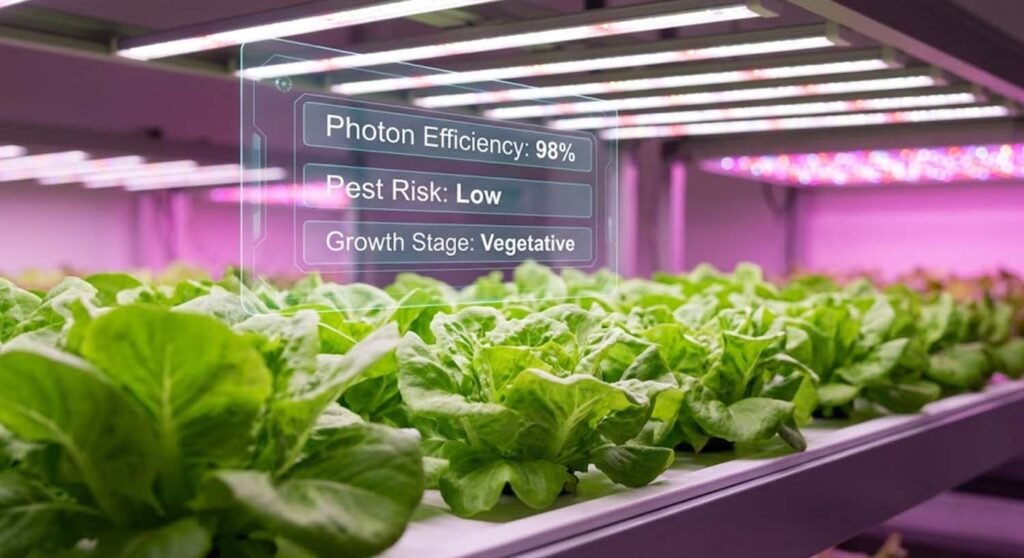
In 2026, Artificial Intelligence has transitioned from a buzzword to the functional brain of modern agriculture. We are witnessing a shift from manual labor to "Decision-Agriculture." Today, Vision AI can identify plant stress, pest outbreaks, and precise growth stages in real-time, allowing systems to adjust water, nutrients, and CO2 levels with surgical precision.
However, a critical question remains: What good is a brilliant brain if the body cannot execute its commands?
The Critical Link: Why AI Requires "High-Fidelity" Execution
1. Data Integrity: The "Garbage In, Garbage Out" Rule
In the world of AI, there is a golden rule: "Garbage In, Garbage Out." AI sensors - whether they are multispectral cameras or quantum sensors - are designed to perceive the environment under specific lighting conditions. If a low-quality LED light has flickering or uncontrolled spectral shifts, the sensors will capture "noisy" data. This leads the AI to make incorrect calculations, such as misidentifying a healthy leaf as having a nutrient deficiency.
- To solve this, SLTMAKS ensures "Optical Purity." Our lamps provide a stable, flicker-free background, allowing AI sensors to work at 100% accuracy without data interference.
2. Precision at the Edge: Micro-Adjustments in SPD
2026 AI models are capable of "Dynamic Spectral Tuning." They don't just turn lights on or off; they adjust specific wavelengths (like the 660nm Red or 450nm Blue) by single-digit percentages to optimize photosynthesis at different hours. If your hardware lacks the precision to execute these micro-commands, the sophisticated AI software becomes a Ferrari with wooden wheels - capable of speed but hindered by its contact with the ground.
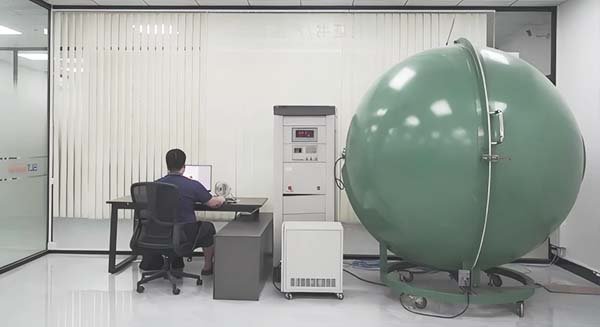
- Through thousands of Integrating Sphere tests, we have proven that our lamps respond to dimming and spectral commands with linear precision. We turn complex AI code into actual, measurable plant biomass.
3. Thermal Stability and Long-term Consistency
AI systems are built on "Predictive Models." For these models to work, the environment must be predictable. Low-end LEDs often suffer from thermal decay—as the lamp heats up, the light intensity and spectrum change. This "drift" forces the AI to constantly recalibrate, wasting processing power and increasing system instability.
- The SLTMAKS Standard: With our industrial-grade heat dissipation and 30 years of industry expertise led by our CEO, SLTMAKS hardware provides a "Locked-in" environment. This consistency allows AI to focus on growth optimization rather than constant error correction.
Resilience in Automation: Reducing the "Failure Cost"
1. The "Ghost in the Machine": The Risk of Unmonitored Failures
In a traditional farm, a flickering lamp or a broken driver is usually noticed by workers within hours. However, in an AI-driven "Dark Farm" (fully automated facility), human eyes are rarely on the plants. If a low-quality light fails, the AI might attempt to compensate by over-adjusting other parameters, leading to a systemic imbalance.
We SLTMAKS engineer our hardware for "unattended reliability." By using industrial-grade components that exceed standard MTBF (Mean Time Between Failures) ratings, we ensure that the "executors" of your AI system won't become the weakest link in the chain.
2. The Cascading Cost of "Spectral Drift"
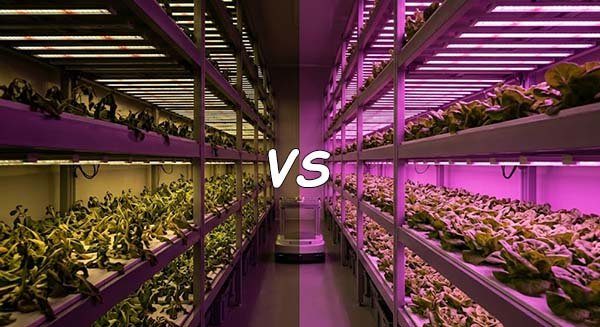
Failure isn't always a total blackout; sometimes it’s a "silent drift." Low-end LEDs often shift their spectrum as they age or overheat. For an AI calibrated to precise light formulas, this drift is catastrophic. It leads to unpredictable crop cycles and missed harvest windows, which are far more expensive than the cost of the lamps themselves.
SLTMAKS provides "Long-term Spectral Integrity." Equiped with top brand Samsung Leds and Listed brand Sosen Driver, PCB and our advanced thermal management systems, which is effectively prevent the overheating that causes premature spectral drift, keeping your AI’s predictive model accurate for years, not months.
3. Insurance for Your High-CapEx Investment
Implementing AI infrastructure in 2026 is a significant Capital Expenditure. Buying cheap lighting to support an expensive AI system is like putting budget tires on a multi-million dollar autonomous tractor. The "Failure Cost" includes not just the replacement lamp, but the lost data, wasted energy, and ruined yield.
- Choosing SLTMAKS is a strategic risk-mitigation decision. Our 5-year warranty and 12-hour+ heavy-duty cycle rating serve as the physical insurance policy for your digital investment, ensuring your CapEx delivers the expected ROI.
Data-Driven Manufacturing: The "AI-Ready" Factory
Digital Twins: The Need for Accurate Photometric Data
Future-proofing is essential for modern distributors and brand owners. Even if a facility is not using AI today, they must invest in hardware that is "AI-Ready" for tomorrow. This requires standardized communication protocols and precise technical data.
Before an AI farm ever plants a seed, it runs a "Digital Twin" simulation to predict growth. For this simulation to be accurate, the AI needs high-fidelity PPFD and spectral data files. If the physical lamp's output differs from the digital file, the entire simulation fails.
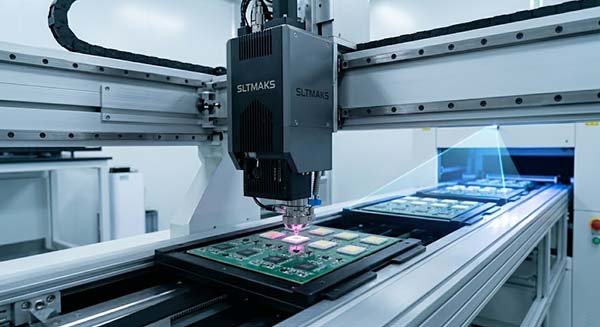
With over 130 patents and a leadership team with 30 years of industry experience, SLTMAKS provides more than just lamps. We provide "Predictable Hardware." We offer full PPFD and spectral data files that allow developers to build accurate "Digital Twins" of their farms. When your hardware is predictable, your AI becomes powerful.
Conclusion: Bridging the Gap Between Code and Crop
As we move further into 2026, the gap between software and hardware is closing. Technology will continue to evolve, but the laws of physics remain constant. Reliable, high-performance LED lighting is the foundation upon which all agricultural AI is built.
At SLTMAKS, we invite global distributors, wholesalers, and brand owners to join us in building the infrastructure of intelligence. Let’s ensure that the "Brain" of your farm has the "Body" it deserves.
FAQ
Q1: Can you provide custom spectrum (OEM/ODM) for specific AI-researched plant formulas?
A: Yes, OEM/ODM services are our core strength. If your AI research has identified a specific "light recipe" (e.g., specific Red/Blue ratios for vegetables or medicinal plants), our R&D team can customize configurations to match your requirements perfectly.
Q2: What is the benefit of using high-precision dimming in an AI-controlled environment?
A: AI often requires "Micro-Adjustments" to save energy during peak hours or to simulate sunrise/sunset. SLTMAKS drivers support linear, flicker-free dimming, allowing the AI to optimize energy consumption without stressing the plants or interfering with monitoring cameras.
Q3: Why is "Industrial-Grade" hardware more important in automated farms than in traditional ones?
A: In automated or "Dark Farms," human inspection is minimal. A failure in a low-quality lamp can go unnoticed for days, ruining an entire batch. Our 5-year warranty and robust build quality act as an insurance policy for your automated investment, ensuring 24/7 operational security.
Q4: How does spectral stability affect the ROI of an automated commercial farm?
A: In automated farming, "Spectral Drift" can confuse AI sensors and lead to inaccurate growth models. SLTMAKS uses industrial-grade thermal management and high-bin LEDs to ensure long-term spectral integrity, preventing crop losses and ensuring your AI-driven yield predictions remain accurate over years of operation.
Q5: Can SLTMAKS LED grow lights be integrated into existing third-party AI farming systems?
A: Yes. Our lights are designed with "Smart-Ready" drivers that support mainstream protocols. Whether you are using a proprietary AI controller or a standardized smart greenhouse platform, our hardware ensures seamless communication and execution.
Q6: How do SLTMAKS lights handle the "High Humidity" environments common in automated aeroponic or hydroponic systems?
A: Automated indoor farms often maintain humidity levels above 70%. Our high-specification lights feature IP65 or IP66-rated waterproof protection and anti-sulfurization treatments for LED chips. This prevents corrosion in the internal circuitry, a common cause of failure in high-tech climate-controlled facilities.
Q7: How does SLTMAKS ensure "Batch Consistency" for multi-phase commercial rollouts?
A: This is a major concern for growing farms. We utilize "Single-Bin" LED selection for large projects. This means whether you buy 500 lamps today or 5,000 lamps next year, the color temperature and spectral peak remain identical, ensuring your AI's growth algorithms don't need constant recalibration.
Q8: Do your lights interfere with the "Computer Vision" (CV) cameras used for pest detection?
A: Low-quality LEDs often produce "banding" effects on camera due to flicker. SLTMAKS uses flicker-free constant current drivers, and all our grow lights are passed EMC test before shipping out. Which ensures that your high-speed AI cameras capture clear, high-contrast images for accurate pest and disease identification.
Q9: Is it possible to integrate "Far-Red" (730nm) or "UV" channels separately for AI-controlled end-of-day treatments?
A: Absolutely. We offer multi-channel control options. Many of our ODM partners request a dedicated 730nm channel that the AI can trigger for 15 minutes at the end of the light cycle to stimulate the "shade avoidance response," effectively speeding up the flowering process.
Q10: Are SLTMAKS products compatible with "Carbon Credit" tracking for sustainable AI farming?
A: High-efficiency lighting is a key component of ESG (Environmental, Social, and Governance) goals. By providing precise wattage and efficacy data (umol/J), we help our B2B clients calculate their carbon footprint reduction, which is increasingly important for securing green financing and energy rebates in 2026.