
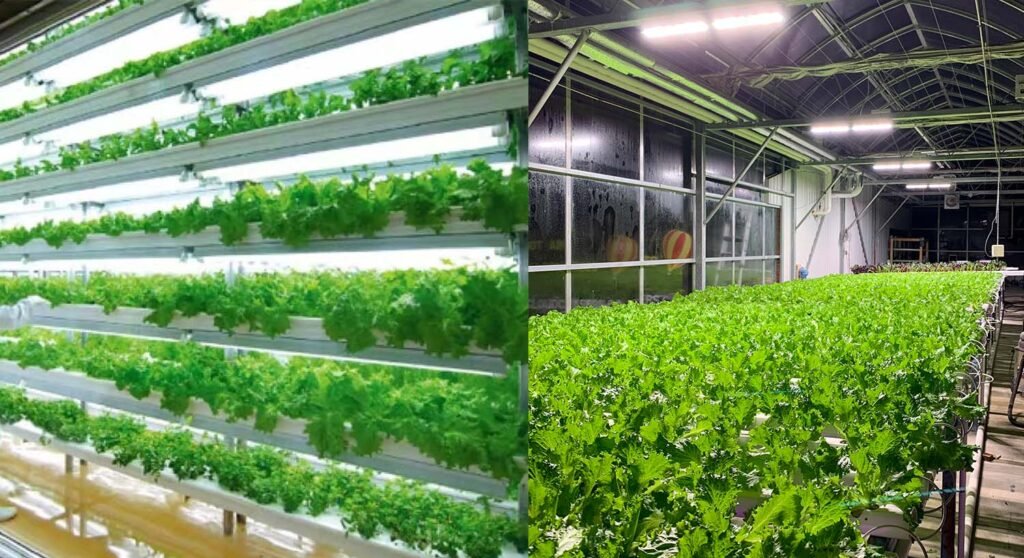
Intro: Growing Food Indoors - The Spectrum of Nutrition
Growing food indoors has evolved from a simple hobby into a sustainable lifestyle and a massive commercial industry. However, crops have high-energy appetites. If you want to crisp up your salad or harvest juicy tomatoes, you need to understand what kind of grow light for vegetables will actually deliver results.
Unlike standard household bulbs that only light up a room, professional agricultural lighting provides the exact light energy vegetables need to taste crisp, develop thick leaves, and lock in nutrients. Let's break down the science and find the best led grow light for vegetables for your specific setup.
Leafy Greens vs. Fruiting Crops: What Color Grow Light is Best for Vegetables?
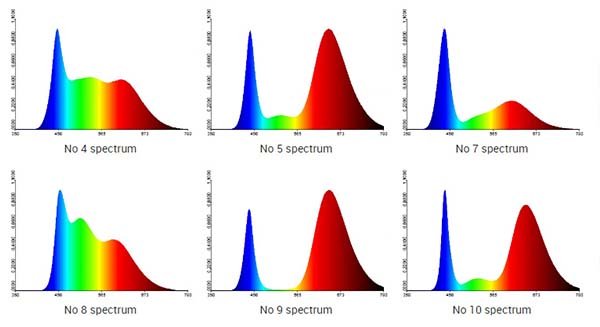
Before buying any hardware, you must define what you are growing. One of the most common questions growers ask is: what color grow light is best for vegetables? The answer depends entirely on your crop's growth stage:
Blue Light for Leafy Greens & Seedlings
- Crops: Lettuce, Spinach, Kale, Basil, and Microgreens.
- Common Sense: These plants thrive under a heavy dose of Blue Light (400-500nm). Blue light encourages compact growth, thick stems, and lush, dark green leaves. It keeps your lettuce stocky and prevents it from stretching and turning bitter.
- The Recipe Secret: These plants don't just need blue to stay short. They need a subtle blend of Red 660nm to penetrate into the lower layers of the dense canopy (since blue and red get absorbed mostly by the top leaves). Furthermore, adding a tiny fraction of Far-Red light 730nm triggers an "avoidance response" that makes the lettuce leaves slightly wider, expanding the surface area to capture more light and maximizing your biomass yield.
Red Light for Fruiting
- Crops: Tomatoes, Peppers, Strawberries, and Cucumbers.
- Common Sense: These plants require a massive amount of Red Light (600-700nm). Red light triggers the hormonal change required for flowering and heavy fruiting. Without intense red photons, your tomatoes will flower but never set fruit.
- The Recipe Secret: Yes, red light drives the blooming stage. But if you want a tomato or strawberry to actually taste sweet and aromatic, you need more. Modern B2B light recipes inject a controlled dose of UV 395nm and deep blue. This stress-signals the plant to produce more secondary metabolites—which translate directly into higher sugar content, intense flavors, and richer vitamins.
Balanced Spectrum for The Underground Crops
- Crops: Carrots, Radishes, Potatoes.
- Common Sense: Red light for it.
- The Recipe Secret: Root crops are complex. They need a highly balanced, robust full spectrum grow light for vegetables that mimics the full intensity of mid-summer sun. Too much blue, and the leaves stay tiny, failing to pump energy downward. Too much red, and the plant bolts early. A continuous, full-wavelength daylight spectrum ensures steady photosynthesis to feed the underground tubers.
💡 The Gold Standard: Instead of trying to guess color ratios, most modern growers invest in a full spectrum grow light for vegetables. A full spectrum fixture (like quantum board and UFO grow light models) mimics natural sunlight, blending premium white daylight with necessary red and blue spikes. It provides a complete sunlight recipe that supports your veggies from seed all the way to harvest.
Managing the Clock: Grow Light Times for Vegetables
Plants need to rest just like humans. Leaving your lights on 24/7 will stress your crops, leading to pale leaves and stunted growth. To keep your system automated and efficient, follow these recommended grow light times for vegetables:
| Vegetable Type | Ideal Grow Light Times for Vegetables | Why |
| Microgreens / Seedlings | 12-14 hours | Balanced dark period allows roots to develop strong foundations |
| Leafy Greens (Lettuce/Basil) | 14-16 hours | Maximizes leaf biomass accumulation without triggering premature bolting. |
| Fruiting Crops (Tomatoes) | 16-18 hours | Massive energy demand, needs long days to pump sugars into fruits. |
The Distance Rule: The Distance Rule: Multi-Tier Racks vs. High-Ceiling Greenhouses
When calculating the perfect indoor grow light distance for vegetables, there is no "one-size-fits-all" number. The hanging height depends entirely on your architectural setup, the fixture’s power (wattage), and whether you are relying 100% on artificial light or using the sun.
Scenario A: Low-Profile Multi-Tier Racks & Vertical Farms (Close-Range / Low Wattage)
In vertical farms, urban kitchens, or when using the best seed starter kit with grow light for vegetables, space is highly constrained.
- Grow Light Fixture: Low-profile, highly distributed linear led bars (typically 15W -50W).
- Distance: 4 to 18 inches (10 to 45 cm).
- The Engineering Logic: Because these linear lights feature low wattage and passive aluminum cooling, they emit almost zero radiant heat downward. Hanging them inches away from the leaves ensures the plants get a strong, concentrated dose of photons (PPFD) without burning. It also maximizes space, allowing you to stack 4 to 6 layers of vegetable shelves in a single room.
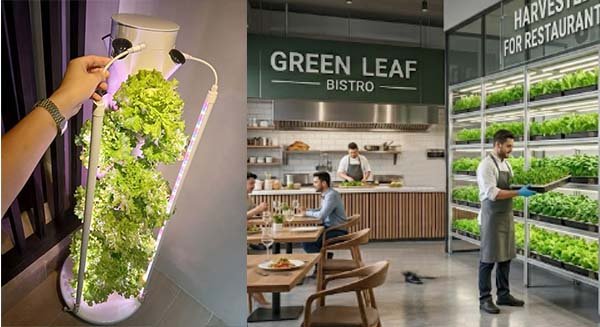
Scenario B: Transparent Film & Glass Greenhouses (High-Ceiling / High Wattage)
In commercial greenhouse environments, the rules change completely. The sun does most of the heavy lifting, and the lights act as industrial supplemental infrastructure to hit the daily target DLI on cloudy days or during winter.
- Grow Light Fixture: Massive, industrial high-output led top lighting (typically 200W - 800W).
- Distance 5 to 10+ feet (1.5 to 3+ meters) above the plant canopy.
- The Engineering Logic: Uniformity Over Brute Force: These commercial lights are beasts. If placed too close, they will create "hotspots" that scorch the plants directly underneath while leaving the edges in the dark. Hanging them at a high clearance allows the intense beam angles to crossover and blend, creating a perfectly uniform blanket of light over an massive acre of crops. And Solar Obstruction Prevention: Hanging fixtures high up near the greenhouse roof structure ensures they don't block the natural, free sunlight during peak daytime hours.
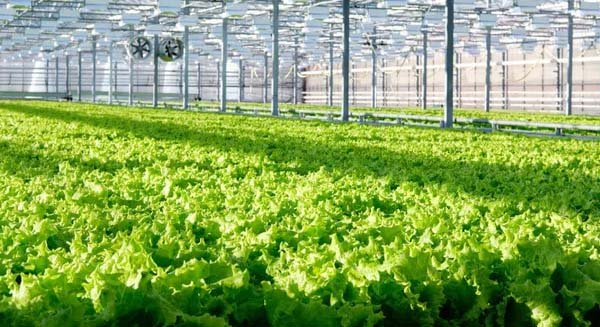
Scaling the Setup: Commercial Greenhouses vs. Smart Urban Kitchens
The hardware requirements for growing food adapt drastically depending on the scale of the facility.
- Large-Scale Farming: The Best Commercial Grow Light for Vegetables: In vast commercial greenhouses or vertical crop factories, grow lights operate as critical supplemental infrastructure to ensure year-round, predictable yields. The best commercial grow light for vegetables must focus on industrial-grade specs. Growers require fixtures with heavy-duty aluminum passive cooling (no fans to break in dusty environments), a verified IP65 waterproof rating to handle automatic overhead misting systems, and a hyper-efficient efficacy rating (μmol/J) to keep annual electricity overhead low.
- Smart Kitchens & Restaurant Cabinets: Form & Function: Step into a modern wellness restaurant or a high-tech home kitchen, and the criteria completely flips. Here, sleek linear LED bars are seamlessly integrated into glass smart grow cabinets. Restaurant guests and homeowners want a beautiful, high-CRI white daylight spectrum that makes the food look vibrant and appetizing, running 100% silently with touch-safe, low exterior temperatures (<65℃) to ensure safety around children and diners.
Conclusion: Feed Your Canopy, Secure Your ROI
Whether you are configuring a multi-tier vertical farm or searching for the best seed starter kit with grow light for vegetables to jumpstart your garden, success comes down to providing the precise light recipe your crops demand. By selecting high-efficiency, well-dissipated, full spectrum grow light for vegetables, you unlock faster grow cycles, superior taste, and beautiful yields.
Ready to scale your indoor agricultural project? Explore our commercial-grade, high-output led grow light solutions designed for maximum PAR output and heavy-duty thermal reliability.
FAQ
Q1: What is DLI, and why does it matter for my indoor vegetables?
- A: DLI (Daily Light Integral) is the total amount of light a plant receives in a full 24-hour day. Think of PPFD as how many bites of food a plant takes per second, and DLI as the total food eaten in a day. Lettuce only needs a DLI of 14-17, while fruiting tomatoes demand a massive DLI of 22-30+. If your light’s PPFD is low, you must run it longer to hit the target DLI.
Q2: Can I grow root vegetables (like carrots or potatoes) under LED grow lights?
- A: Yes! But because the harvest grows underground, the plant needs a massive amount of excess energy above ground to push sugars down into the roots. You will need a full-spectrum, high-intensity light and a deep growing container.
Q3: Can grow lights change the actual taste, crispness, or color of my vegetables?
- A: Yes, absolutely. The light spectrum directly controls the plant’s production of secondary metabolites. For example, if you grow red leaf lettuce under pure white fluorescent lights, it will often stay green and taste bland. By choosing a full spectrum grow light for vegetables that includes a precise spike of deep blue (450nm) and trace UV-A, you trigger the plant to produce anthocyanins. This turns red lettuce vibrant purple-red, boosts the crispness, and significantly enhances the aromatic flavor profile of herbs like basil and mint.
Q4: How do I adjust my grow light times for vegetables when transitioning between winter and summer in a greenhouse?
- A: This is where you calculate Supplemental DLI (Daily Light Integral). In the high-summer months, natural sunlight might provide a DLI of 25-30 inside your film or glass greenhouse, meaning you can turn your best commercial grow light for vegetables completely off to save thousands in electricity. In dead winter, natural solar DLI can drop below 5-8. To keep lettuce growing at peak commercial speed, you need a target DLI of 17. You must calculate the deficit (9 DLI missing) and run your high-output LED fixtures for 12 to 16 hours to bridge the gap. Modern B2B farms use automated PAR sensors to dim or brighten the LEDs in real-time based on shifting cloud cover.
Q5: What is "Voltage Drop," and why should B2B commercial vegetable growers care about it when installing long chains of linear bars?
- A: Voltage drop occurs when electrical current travels down a long daisy-chain of grow lights. The resistance in the wires causes the voltage to decrease, meaning the fixtures at the far end of the row will receive less power than the lights closest to the source. The Risk: In a vertical farm or greenhouse, this leads to uneven PPFD. The vegetables at the front will grow rapidly, while the crops at the end of the line will suffer from lower light levels and maturity delays, ruining your harvest consistency. Always ensure your hardware vendor uses heavy-gauge copper wiring and heavy-duty industrial drivers designed to handle long-distance daisy chains without power loss.
Q9: Do I need a different spectrum for the germination stage vs. the mature harvest stage of vegetables?
- A: It depends on your scale, but generally, yes. Seedlings have very sensitive cellular structures and low DLI requirements. Blasting them with intense, full commercial power will fry them. The Best Setup: When configuring the best seed starter kit with grow light for vegetables, you want a light recipe highly concentrated in gentle cool-white/blue light with a low PPFD. This tells the radical sprout to stop stretching and establish strong, deep roots. Once the plant enters the active vegetative phase and grows true leaves, you can transition it under the raw, penetrating power of a full spectrum grow light for vegetables to build mass and leaves.