
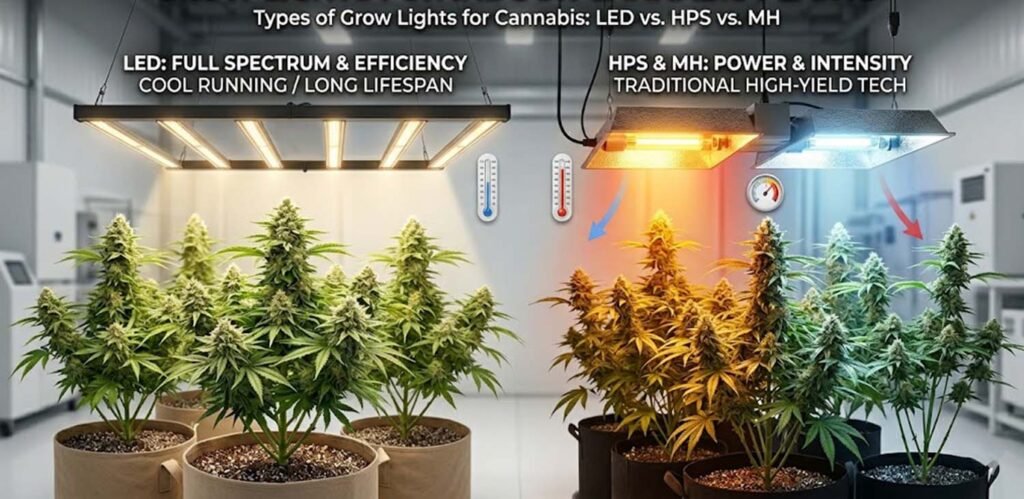
Intro: The Golden Rule - It's Not About What You See, It's What the Plant Needs
Most new indoor plant owners make the same mistake: they buy a standard LED bulb from the hardware store and think it will make their plants happy. When the plant continues to stretch and wither, they blame themselves for being a "black thumb."
Here's the truth: standard house lights are designed for human eyes, to make your living room cozy. They provide almost zero energy for photosynthesis. Plants need specific light spectra (colors) and a high light density. You need a dedicated grow light. Let's explore the types and find the perfect match for you.
Understanding the Main Contenders: A Battle of Technologies
Incandescent Grow Lights
The Reality: The oldest, cheapest bulbs in existence. They work by running electricity through a wire until it gets so hot it glows.
- Pros: Ultra-cheap to buy initial hardware.
- Cons: Extremely inefficient. 95% of the energy is wasted as heat, not light. They consume massive electricity and can scorch your leaves if too close. They are a "❌ Avoid" for serious growing.
- Conclusion: DO NOT USE.
Fluorescent Grow Lights (Tubular or Spiral)
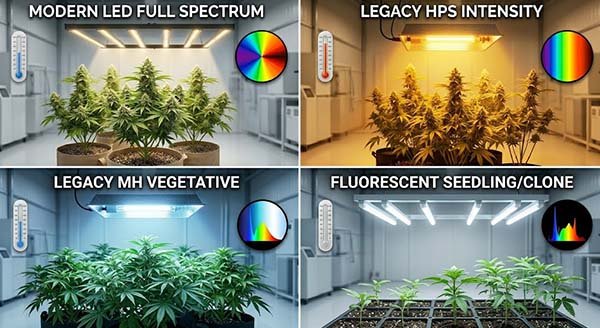
The Reality: These were the kings of indoor herb gardening before LED took over. They use gas to create light and are known for their long tubes.
- Pros: Affordable price. Produce minimal heat (so they can be placed very close to plants). Excellent for starting seeds and seedlings, leafy greens like lettuce, and succulents. They won't burn your leaves.
- Cons: Bulbs have a short lifespan and lose light intensity over time. They are fragile, contain a small amount of toxic mercury, and have limited spectral output. Not suitable for fruit-bearing plants (like tomatoes).
- Conclusion: Okay for low-light needs and tiny budgets, like seedlings, leafy greens.
HID Grow Lights (High-Intensity Discharge) : The Old-School Powerhouses
The Reality: High-Intensity Discharge (HID) systems are the gas-guzzling muscle cars of the grow light world. They don't use filaments or simple semiconductors; instead, they strike an electrical arc through a gas-filled bulb to create an incredibly intense, blazing light.
To understand HID, you need to know its two famous family members, which commercial growers often used together as a tag-team:
Type A: MH / Metal Halide Grow Lights - The Vegging Expert
- The Spectrum: MH bulbs emit a crisp, blue-white light that closely mimics the bright, direct sunlight of spring and summer.
- Best Used For: The vegetative growth stage (foliage and stems). The heavy blue spectrum keeps plants short, stocky, and prevents them from stretching excessively. It’s perfect for growing dense, leafy greens or keeping mother plants healthy.
- The Catch: They run very hot, degrade in light output faster than almost any other bulb, and lack the red spectrum needed for heavy flowering or fruiting.
Type B: HPS / High Pressure Sodium Grow Lights - The Flowering Champion
- The Spectrum: HPS bulbs strike a stark contrast to MH, emitting a powerful, warm orange-red glow that resembles the deep, angled sunlight of late autumn.
- Best Used For: The flowering, budding, and fruiting stages. The intense red spectrum triggers a massive hormonal response in plants, encouraging them to pack on heavy buds, flowers, and fruits. For decades, it was the gold standard for indoor yield production.
- The Catch: Plants grown only under HPS from seed tend to become tall, lanky, and "stretchy" because it lacks blue light. Also, the orange light makes it incredibly difficult for the human eye to spot pests or diseases on the leaves.
The Verdict on HID (MH/HPS) for Modern Indoor Growers
- Pros: Massive light penetration. If you have a giant warehouse or a 10-foot-tall grow tent and want to blast a huge canopy with brute-force light, HID is still a cheaper initial hardware investment compared to giant commercial LED setups.
- Cons: The Thermal Nightmare. Both MH and HPS convert a massive amount of electricity into heat. If used at home, they will quickly turn your room into a greenhouse oven. You must install inline exhaust fans, ducting, and sometimes dedicated air conditioning just to manage the heat. Furthermore, your electricity bill will skyrocket.
- Conclusion: Leave them in the past for home use. Unless you are running a large-scale warehouse operation with professional ventilation infrastructure, the excessive heat and power consumption make HID completely impractical for modern living rooms, shelves, or kitchen gardens. Modern High-Output LEDs do everything they can do, but at half the power and with zero heat stress on your plants.
LED Grow Lights: The Modern Standard
The Reality: The current king of grow light technology. They work by using semiconductors to convert electricity directly into light with incredible efficiency. This is the technology in our growlights.
- Pros: Maximum efficiency (more light, less power). Lifespan up to 50,000 hours. Can be fine-tuned for a perfect full spectrum (including white light) to suit all growth stages. Minimal heat (meaning less energy wasted). Sleek, compact, and often plug-and-play.
- Cons: Higher initial hardware cost than fluorescent bulbs (but they pay for themselves in electricity savings over time). High power models still produce internal heat that needs good engineering to manage.
- Conclusion: THE ULTIMATE CHOICE. Efficient, powerful, and friendly for both homes and professional commercial setups.
Breaking It Down: Why We Chose LED for Our B2B Professional Bars
We didn't just pick LED because it's trendy. In the B2B world, where commercial farms or vertical growing systems require 24/7 reliability, LED is the only logical choice. Here’s why we engineered our heavy-duty linear bars the way we did:
Spectral Tailoring for Plant Success
We can dial-in the exact spectral recipe plants love. In our golden 1300w grow lights, we provide a fine-tuned full spectrum. This doesn't look purple like older led models; it's clean, full-spectrum, and eye-friendly, but packed with the precise DLI (Daily Light Integral) required for short, bushy growth and high essential oil production.
Heavy-Duty Engineering for Lifespan & Safety
While LEDs consume far less power than HID, they still create internal heat at the diode level. If this heat isn't managed, the diode will cook itself and lose performance quickly. This is where B2B-grade design matters. Unlike cheap, thin aluminum bars, our premium Golden 1300W led grow lights are engineered with a heavy-duty, complex aluminum, wide bar design. This large metal body acts as a massive passive heat sink, pulling heat away from the LEDs and dissipating it efficiently. This design not only extends the LED lifespan to its true 50,000-hour potential but also ensures your grow space stays safe and comfortable, preventing any scorching risks.
Form Factors: Which Shape is Right for You?
How you want to install your light is just as important as the technology inside.
- Linear Bars/Tubes (Like our T5 T8 grow tube and linear top lighting bar): Perfect for multi-tiered shelves (for microgreens, lettuce, or large succulent collections), vertical farming, or commercial grow spaces. They provide uniform, even light across a large linear area.
- Heavy Power Grow Lights (Like our folding series grow lights and Gavita top lights): Power and large footsprint for commercial indoor farming and greenhouse cultivation.
- Grow Bulbs (Like PAR38 bulbs): Ideal for individual plants (like a single large Monstera) or when you want to use existing lamps. Great for living spaces where aesthetics must be maintained.
- Panel Lights (Like our Quantum Boards): Powerful lights designed to cover a square area. Best for grow tents.
- Clip-On lights/ Floor Standing Grow Lights: Cheap and convenient, but often low-power and not efficient for larger growth. Great for living spaces where aesthetics must be maintained.
The Pro-Mix: Can You Combine Different Grow Lights? (B2B & Commercial Insights)
Once you understand the strengths of each light - like the blue power of MH, the red fiery output of HPS, and the hyper-efficiency of LED - a natural question arises: Can I combine them to create the ultimate growth environment?
The answer is yes, but it depends heavily on your growing setup. In the commercial horticulture world, this is known as Hybrid Lighting. Here is how the pros handle it, and what it means for your investment:
The Dying Trend: MH + HPS Tag-Team
- How it worked: Historically, traditional indoor growers would use MH grow lamps during the vegetative stage to keep plants bushy, and then physically swap the bulbs or switch over to HPS grow lamp during the flowering stage to boost yield.
- Why it’s obsolete: It’s an operational nightmare. Managing two separate bulb systems that degrade rapidly (losing intensity within 6–12 months) means massive maintenance labor and skyrocketing replacement costs. Plus, the combined heat requires an industrial-grade AC system.
The Modern Power Move: LED + HPS Hybrid (Best for High-Ceiling Greenhouses)
For large-scale, high-ceiling commercial greenhouses - especially in cooler northern climates - the LED + HPS hybrid system is currently a highly respected setup.
- Perfect Spectral Synergy: HPS delivers an unmatched raw intensity of deep orange-red light, which is incredible for heavy fruiting. However, it lacks blue. By adding high-output full-spectrum LED grow lights into the grid, growers can inject the missing blue and high-efficiency white light. The result? Peak crop density, intense aromatic profiles, and maximum yield.
- The Climate Balance Trick: In the winter, growers run both; the high heat from the HPS bulbs actually helps warm the greenhouse, reducing heating bills. In the blistering summer, they turn off the scorching HPS systems entirely and run only the low-heat, high-efficiency LED bars, saving thousands of dollars in cooling and preventing heat stress on the crop. Most Canadian growers like this combination.
The Multi-Tier Verdict: When to Go 100% LED
What if your project involves vertical farming, multi-tiered shelves, or space-constrained indoor grow facilities?
❌ Never mix HID/HPS here. The intense radiant heat from an HPS bulb will instantly bake and kill your crops if placed within a few feet of the canopy.
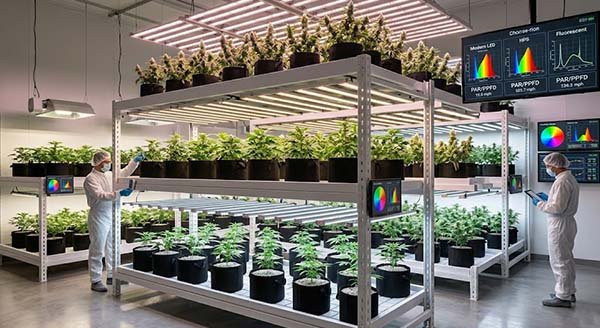
💡 The Pro Solution: For any shelved or multi-layer configuration, 100% pure LED grow lighting is the only viable choice. Heavy-engineered bars, feature thick, passive aluminum heat-sinks that keep the operating chassis under <65°C. This allows you to mount the lights inches away from the leaves, maximizing your vertical space and ensuring a perfectly uniform canopy with zero burning risk.
Conclusion: Your Plants Are Waiting for the Right Light
Growing indoor plants isn't about trial and error; it's about providing the basic requirements they need. By investing in the right type of grow light, particularly high-efficiency, well-dissipated LED, you ensure your plants stay compact, vibrant, and aromatic, no matter how many cloudy days you have outside.
If you are planning a multi-tiered herb shelf, a vertical farm project, or looking for premium, heavy-duty grow lighting engineered for high spectal uniformity and passive cooling, explore our range of LED Horticulture Lightings. We are here to help you scale your success.
FAQ
Q1: Can I leave my grow lights on 24/7 to make plants grow faster?
- A: No, absolutely not. Just like humans, plants need to sleep. During the dark period (night), plants stop photosynthesizing and undergo a crucial process called respiration, where they break down the sugars they made during the day to fuel growth and root development. Most indoor plants and herbs need 12 to 16 hours of light and at least 8 hours of complete darkness. Leaving lights on 24/7 will stress the plant, leading to pale leaves, stunted growth, or burnt tips. Use a simple timer to automate this cycle.
Q2: Why are my plant's leaves turning yellow even though I’m using a grow light?
- A: A grow light is a powerful tool, but it cannot fix other environmental mistakes. Yellow leaves usually point to three non-light factors:
- Overwatering: The #1 killer of indoor plants. If the soil is constantly soggy, the roots suffocate and cannot absorb nutrients, causing leaves to yellow and drop.
- Nutrient Deficiency: If your plant has been in the same potting mix for months, it might have starved out the nitrogen.
- Light is too close (Light Burn): If the yellowing is only happening on the very top leaves closest to the bulb, and they look bleached or crispy, the light intensity is too high or too hot.
Q3: Does a grow light prevent mold or powdery mildew on my herbs?
- A: Indirectly, yes, but only if you choose a light with the right spectrum and engineering. High-quality grow lights that include specific bands of UV (Ultraviolet) light have a natural sanitizing effect that can slow down fungal spore development. Mold and powdery mildew thrive in stagnant, humid air. While a professional light helps keep the plant canopy strong and resilient, you must pair it with good ventilation (like a small fan) and proper spacing between plants to keep the air moving.
Q4: What is the difference between LUX and PPFD? Which one should I care about?
- A: Ignore LUX; only care about PPFD.
- LUX / Lumens measures how bright a light looks to the human eye. Since human eyes are highly sensitive to green/yellow light but blind to the deep blues and reds plants eat, a high LUX rating could mean a light is great for reading a book, but useless for a plant.
- PPFD (Photosynthetic Photon Flux Density) measures the exact number of plant-usable light photons that actually hit your leaf surface per second. When buying a grow light, always ask for the PPFD chart, not the lumen rating.
Q5: Can I use the same grow light for both my low-light houseplants and my high-light herbs?
- A: Yes, but you have to use the "Distance Rule." A high-output grow light (like a professional quantum board grow light) can easily support a sun-loving plant like Mint or Basil. If you want to place a low-light plant (like a Pothos, Calathea, or Snake Plant) under the same light, you don't need a different light - you just need to move it further away. How it works: Light intensity drops drastically the further away it gets from the source. Place your high-light herbs right under the sweet spot of the light (e.g., 8–12 inches away), and place your low-light houseplants at the edges of the light beam or 2–3 feet below it.