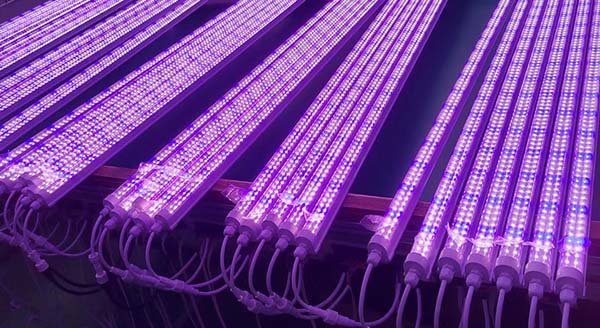
Introduction:
In legacy fluorescent lighting, the "T" prefix simply dictated the tube's diameter in eighths of an inch (e.g., T5 was 5/8 inch, T8 was 1 inch). However, in 2026, as commercial facilities completely phase out inefficient gas-discharge lamps, the T-designation has evolved into a vital indicator of a fixture's internal thermal volume, maximum wattage capacity, and optical deployment strategy.
Many overseas trading companies still market LED grow tubes using generic retail descriptions, ignoring the core engineering physics. They treat a tube as a commodity. As a premium B2B source factory, we strip away the marketing hype to deliver an honest engineering breakdown. This guide will demonstrate how a strategic combination of T5, T8, T10, and the revolutionary T20 special-payload bar can optimize your cultivation facility’s layout, protect your hardware investment, and shatter previous yield ceilings.
Dimensional Physics and Botanical Ecosystem Alignment
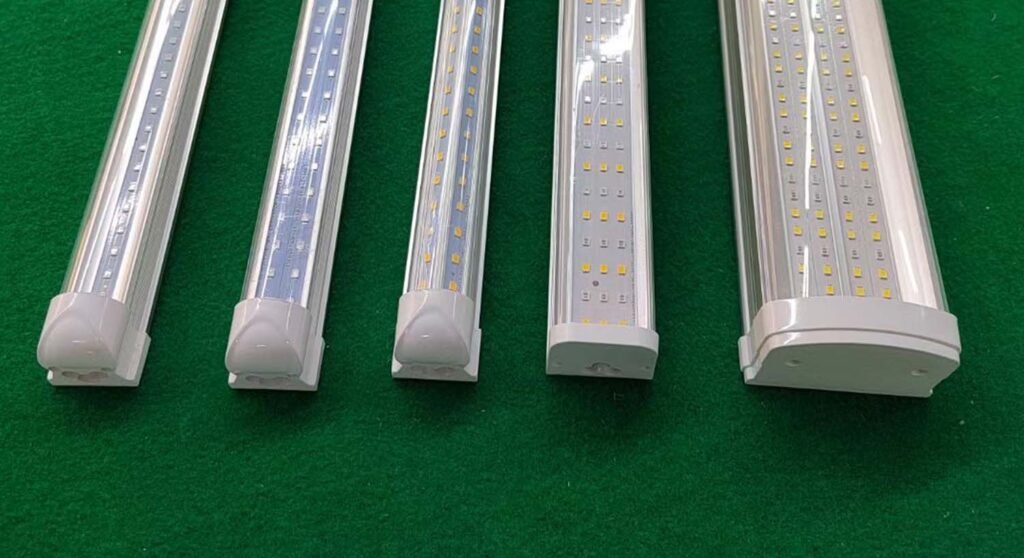
| T5 | 16mm (5/8") --> Multi-Layer Vertical Veg / Tissue |
| T8 | 26mm (1") --> Standard Propagation |
| T10 | 32mm (1-1/4") --> Micro-Greens / Flowering |
| T20 | 64mm (2-1/2") --> High-Output Micro-Greens / Flowering / Specialized UV/IR Payload |
T5 (Diameter: 16mm / 5/8 inch) – The Micro-Space King
- Botanical Fit: Tissue culture, micro-cloning, leafy greens, and early-stage seedling propagation in tight multi-layer vertical racks.
- The Physics: T5 tubes possess the highest surface-area-to-volume ratio. Because the profile is ultra-thin, the light path can be focused with precise micro-reflectors or optical lenses. It delivers highly concentrated PPFD at close distances (10 - 25cm from the plant canopy) without creating hot spots or burning tender tissue. However, its small cross-section severely limits internal copper trace widths, making it unsuitable for high-wattage configurations.
T8 (Diameter: 26mm / 1 inch) – The Commercial Standard
- Botanical Fit: Mainstream commercial cloning, vegetable leafy greens, and secondary supportive vegetative lighting.
- The Physics: T8 represents the most balanced cost-to-performance ratio in the industry. The 26mm chassis provides ample space to dual-line premium LED chips (such as Ledstar or CREE). The thermal distribution is wider than the T5, meaning the photons are delivered in a uniform matrix rather than a sharp line, making it ideal for rolling benches where cross-lighting coverage is mandatory.
T10 (Diameter: 32mm / 1-1/4 inch) – The High-Output Bridge
- Botanical Fit: High-PPFD vertical farming vertical racks, medical-grade herb vegetative cycles, and low-clearance craft flowering setups requiring intense canopy penetration.
- The Physics: As professional commercial facilities demanded more power from linear platforms to accelerate biomass, the T10 emerged. The 32mm heavy structural frame allows manufacturers to scale single-tube wattage up to 42W - 65W safely. It acts as an engineering bridge, delivering high PAR metrics from a sustainable distance of 30 - 50cm above the crop canopy without inducing thermal bleaching.
T20 (Diameter: 64mm / 2-1/2 inch) – The Specialized Tactical Payload Bar
- Botanical Fit: Independent supplemental UV/IR targeting for commercial cannabis flowering rooms, peak intensity simulation in elite research growth chambers, and high-end commercial rainforest/vivarium biomes.
- The Physics & Real-World Niche: Let's establish immediate engineering honesty: compared to a massive 800W or 1000W multi-bar LED commercial fixture driving a standard canopy, a single 75W - 150W tube is fundamentally a baseline supplemental tool. It is NOT designed to be the primary white-light source for high-DLI flowering.
Solving the UV/IR Thermal Trap: Why the T20 Form Factor is Mandatory
Commercial master growers know that adding Ultraviolet (UV-A/UV-B) and Infrared (IR) photons is non-negotiable for maximizing trichome density, terpene profiles, and triggering the Emerson effect. However, forcing these volatile diodes into standard fixtures introduces severe engineering failure points.
The T20 Metal Heat Sink Advantage
The T20 chassis utilizes its 64mm cross-section as an elite thermal radiator. Formed from heavy-gauge anodized aviation aluminum with deep, integrated cooling fins, it acts as a thermal sponge. It pulls the intense heat away from 150W of high-power UV/IR chip clusters, dissipating it via natural convection currents. This keeps the delicate UV junction temperature under 65℃, effectively extending the operating lifespan of the specialized spectrum by over 200%.
Absolute Operational Autonomy
Plants do not require UV exposure during the vegetative stage; running UV constantly is a massive waste of electricity and risks stressing young crops. By sourcing T20 tubes as standalone UV/IR payload bars, commercial facilities gain absolute operational autonomy. You can hang the T20 parallel between your main 800W/1000W white-light fixtures and wire them to an independent smart controller. Cultivators can keep the T20 completely powered off during Veg, and cycle them strictly during the final 2 to 3 weeks of the flowering phase to trigger a massive terpene and THC "flush" without wasting a single watt of baseline power.
Expanding the T20 Footprint: Alternative High-Profit Applications
Beyond serving as a tactical terpene-booster for premium medicinal flower, the engineering characteristics of the T20 make it uniquely qualified for two other high-margin global markets:
Elite Agritech Climate Chambers: Peak-Sunlight Simulation
University research labs and corporate plant breeding facilities often operate sealed, high-precision growth chambers. They face a paradox: standard T5/T8 bars lack the driving intensity to simulate the harsh, high-penetration photons of real-world solar noon. Conversely, installing a massive 800W multi-bar fixture into a compact, confined chamber creates localized thermal explosions that destroy the HVAC climate equilibrium.
The T20 Solution: Outfitted with specialized full-spectrum chips, a T20 system can be programmed via 0-10V/PWM protocols to act as the "Noontime Spike." While T5/T8 tracks handle early morning and late afternoon simulation, the T20 fires up for 2 hours to deliver intense, deep-canopy PAR penetration. Its heavy aluminum body ensures that all driver and diode heat is structurally conducted away efficiently, preventing ambient temperature spikes in the chamber.
High-End Commercial Herpetology & Luxury Living Walls
The luxury architectural and commercial reptile breeding markets are experiencing rapid growth. Large-scale indoor living moss walls and high-value exotic herpetological biomes (e.g., breeding Galápagos tortoises or rare chameleons) require a dual-spectrum approach: plants need PAR, while reptiles require intense UV-B for calcium synthesis paired with Infrared (IR) to simulate natural basking thermoregulation.
The T20 Solution: Traditional setups rely on an unsightly, hazardous cluster of plastic dome spotlights, ceramic heaters, and cheap retail tubes. A single T20 bar integrates all three profiles - PAR white light, heavy-duty UV-B, and convective IR heat - into an ultra-sleek, minimalist industrial cylinder. Featuring an IP65-certified completely sealed enclosure with vulcanized silicone rings, the T20 effortlessly withstands continuous automated high-pressure misting and ultra-sonic foggers, providing an ultra-safe, aesthetically premium solution for high-end public spaces.
Conclusion:
In the modern commercial horticulture landscape, purchasing grow lighting based on generic model numbers alone is a liability. Deciding between T5, T8, T10, and T20 is an intricate balancing act between your facility’s vertical rack clearance, structural weight ceilings, and targeted phytochemistry goals.
Stop gambling your quarterly biomass yield on cheap retail-grade tubes with built-in thermal traps that yellow, crack, and burn out. Contact our B2B engineering team today for certified material data sheets, verified PPFD heat maps, and mill-direct container contract pricing.